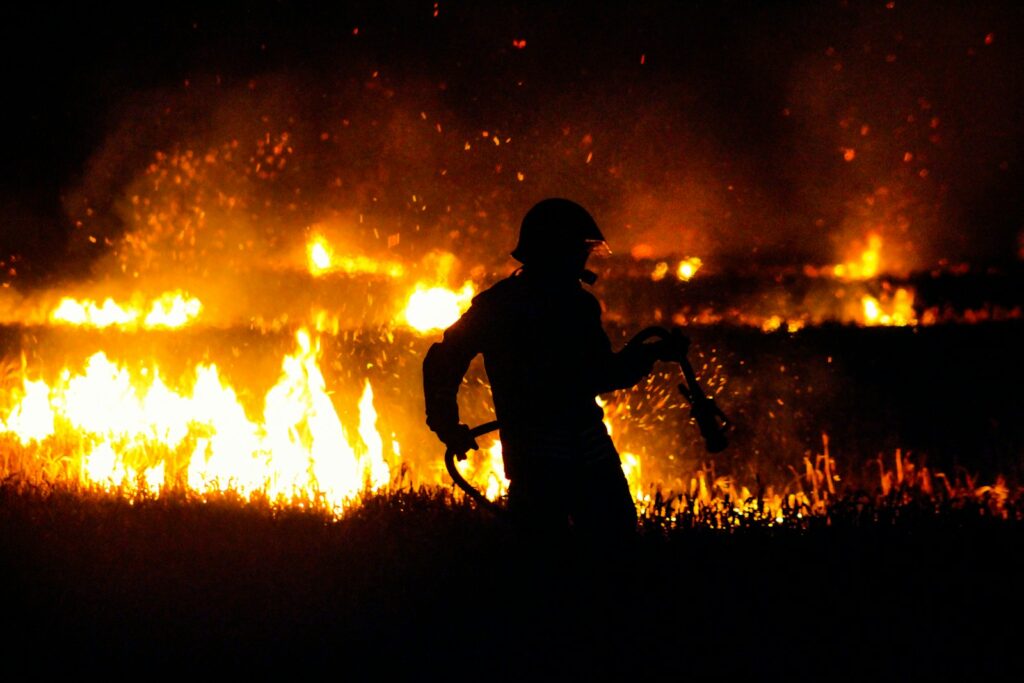
For communities in “wildland urban interface” (WUI) areas across Canada, there is an urgent need to more efficiently address challenges in preparing for and preventing fires, reveals a recent study by researchers at York University.
After the worst wildfire season in the country’s history, residents of WUI communities are certainly ready to take preventive steps. But despite the availability of programs aimed at mitigating residential wildfire risks, these residents are still encountering significant hurdles in implementing the proposed measures.
The study, Determinants of Residential Wildfire Mitigation Uptake: A Scoping Review, 2013–2022, was published in the Fire Safety Journal. York University researchers explored individual and social factors contributing to a lack of preparedness. Professor Eric B. Kennedy, co-author of the study, emphasizes that these communities need to move from simply knowing how to mitigate risk to the rapid and widespread adoption of these prevention measures that are crucial for wildfire readiness.
Presenting the findings at the 14th International Symposium on Fire Safety Science in Tsukuba, Japan, co-author and York University graduate Sarah Cowan highlighted key barriers identified through a review of 78 academic journal articles from the past decade. Financial constraints, limited time and resources, as well as physical limitations, are the most cited obstacles to property improvements by residents.
Professor Kennedy agrees that the financial burden associated with home improvements, along with the physical toll of clearing vegetation and other manual labour duties, are the biggest impediments to safeguarding properties.
The study points to the role of homeowners’ associations in exacerbating vulnerability to wildfires. Kennedy explains how certain associations’ rules and norms, often aimed at preserving aesthetics, may inadvertently increase property susceptibility to fires by using flammable materials or failing to adhere to best practices in construction.
To address these issues, Kennedy advocates for alignment between building codes and wildfire prevention practices, emphasizing the need for municipalities and homeowners’ associations to prioritize fire-resistant construction materials and landscaping techniques. As the 2024 fire season approaches, the York University study reminds all Canadians that proper preparation for foreseeable disasters like wildfires is crucial for the stability and resiliency of at-risk communities